

Three years ago, the world awoke to a massacre in Israel, that rocked the nations and set in motion a series of horrific responses that reverberate today.
7/10/23 joined 9/11 as a number that stood for a story.
Do you remember where you were?
When We Cease to See
The anniversary of October 7 reminds us what human beings become capable of when they cease to see other human beings as people.
In a few weeks, Jocelyn and I will fly into Kraków, Poland on our way to Ukraine. 80+ years ago, Kraków and Auschwitz were the scenes of genocide.
During the liquidation of the Kraków ghetto, Jewish families hid wherever they could: behind walls, beneath floors, in spaces barely large enough to hold them. Outside, there was shooting, shouting, and arbitrary death. Inside, survival depended on silence.
If you’ve seen the 1993 movie Schindler’s List, you may remember that Oskar Schindler’s Factory was in Kraków, where Schindler employed Jewish workers to protect them. An entire community disappeared behind a label. It is easier to hate or abuse a collective than it is to stare in the eyes of one person in that collective.
The Little Girl In The Read Coat
In the black-and-white movie, there is a scene of a little girl in a red coat, the only element shown in color. It was the anthesis to the process of dehumanization. To see a person rather than an entire community or nation, humanizes them and in turn, the collective.
Warfare today, particularly in Ukraine, is dehumanized. Someone pushes a button that launches a rocket from 1,000s of km away that kills faceless strangers indiscriminately. They never see the devastation they cause. It’s inhumane.
On Thursday October 8th, two mini-buses filled with people were hit by Russian drones. 37 people died and the count was still increasing as I wrote this. In Kyiv, an elementary school was rocketed. The screenshots are the least horrific of what I saw.
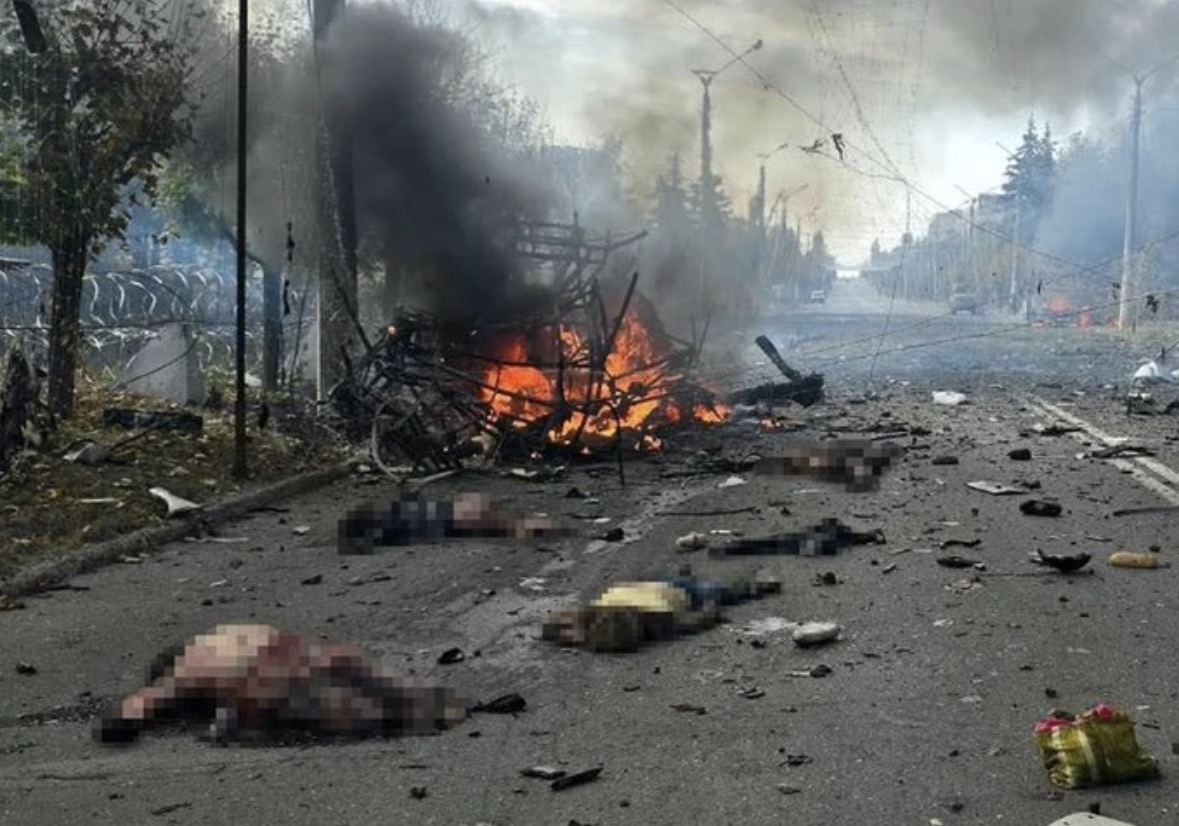
Screenshot
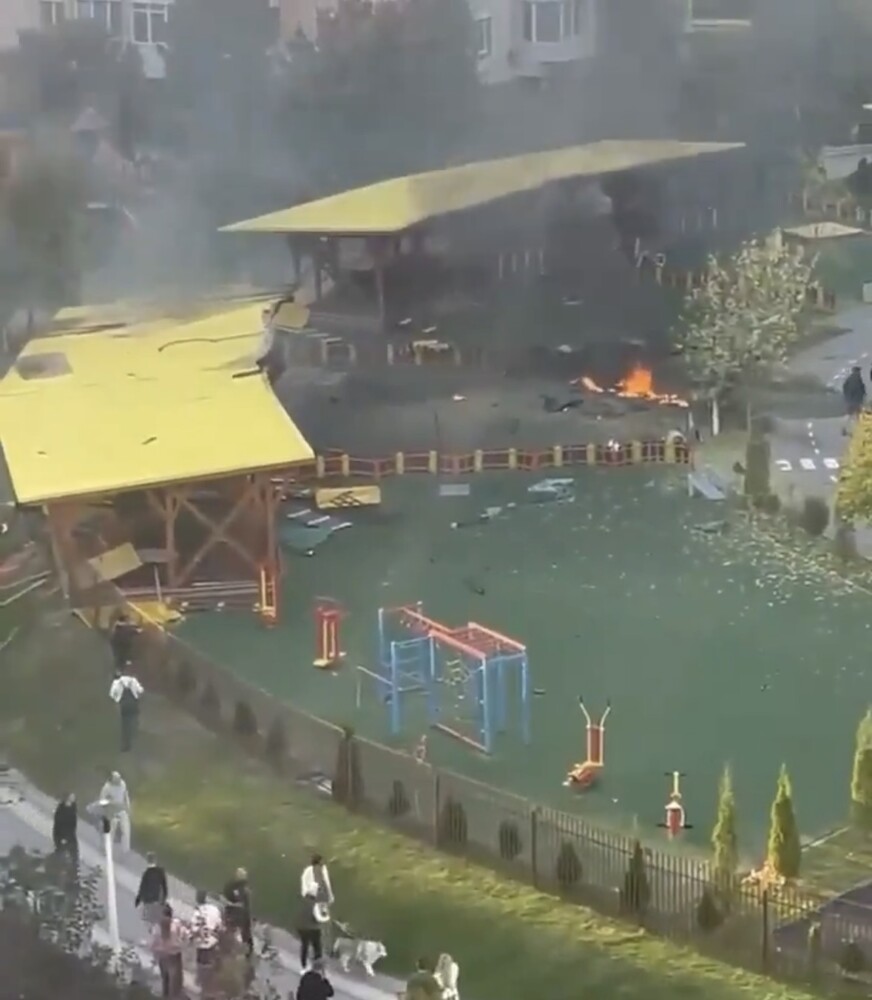
Screenshot
Ukraine is a long way from Israel, but then again it’s not. I met a little girl in a children’s hospital in Ukraine in the summer of 2025. Jocelyn and I were invited by care workers from a church to shadow them on one of their wee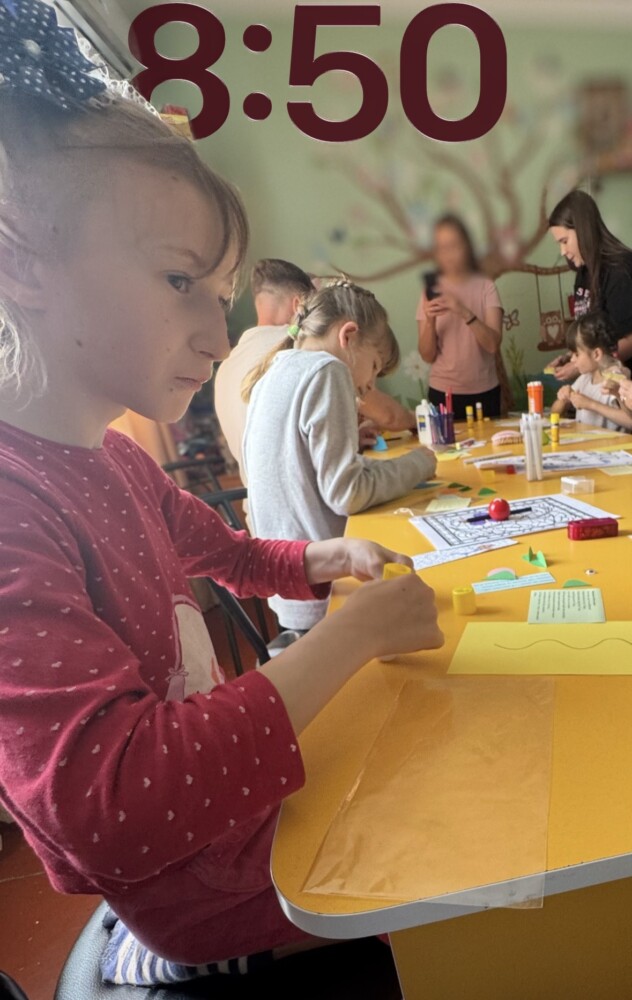 kly visits to these children. We were informed that each child had been bereaved of their family during the war and were suffering the effects of PTSD. The team we were with led some activities and shared a story from the Bible and then invited us to sit with the children as they made a craft.
I took the last empty seat beside a girl who was using a glue stick to attach coloured paper cutouts to a handout the volunteers gave her. She was humming softly to herself as she went about her work. She didn’t speak English. My Ukrainian stopped at “Hello.” She accepted my help with the cutouts and we became partners.
A Face Of The War
In a nation of 40 million, she became the face of this terrible war. The “girl in the red coat.” We have four granddaughters. I have their pictures in my wallet. This little girl looked to be the age of our youngest granddaughter. Her image is on my iPhone wallpaper as a reminder that she deserve everything I want for my granddaughters. Everything you want for your children.
She is the sum of the reasons we go to Ukraine. We can’t speak the language very well, but we can be present.
When a physician simply sits in silence with a patient, bearing witness to their pain, uncertainty, or mortality, they offer a sacred presence.
No intervention is given-but everything is felt.
“Sometimes healing is not in what you say, but in the fact that you stayed.”
We remind people that they are not forgotten, delivering food, praying with people, sharing about Jesus, or helping a little girl with a craft in a hospital.
Ukrainians tell us often: we know it’s dangerous for you to be here, but we’re glad you came.
So are we.
What do you think? Please join the conversation and post a comment below.
Hope grows here. We share stories that inspire people, build faith, and offer lasting purpose.
We’d love to have you Subscribe to REVwords. We’ll put helpful content into your inbox Mondays and Fridays.


